 15
15Investor
December 30, 2025
Why did gold “sell off sharply” by 4–5% on Dec 29, 2025?
.png&w=3840&q=75)
Monday, December 29, 2025 delivered one of the most abrupt reversals in the precious-metals space this year: spot gold fell roughly 4–5%, while silver was hit even harder at one point dropping close to 9% after a steep, record-setting run-up.
What stands out is that this was not simply “gold turning bearish because of one macro headline.” It looked much more like a position unwind / flow shock in futures markets where leverage, thin year-end liquidity, and a margin change reinforced each other and triggered cascading selling.
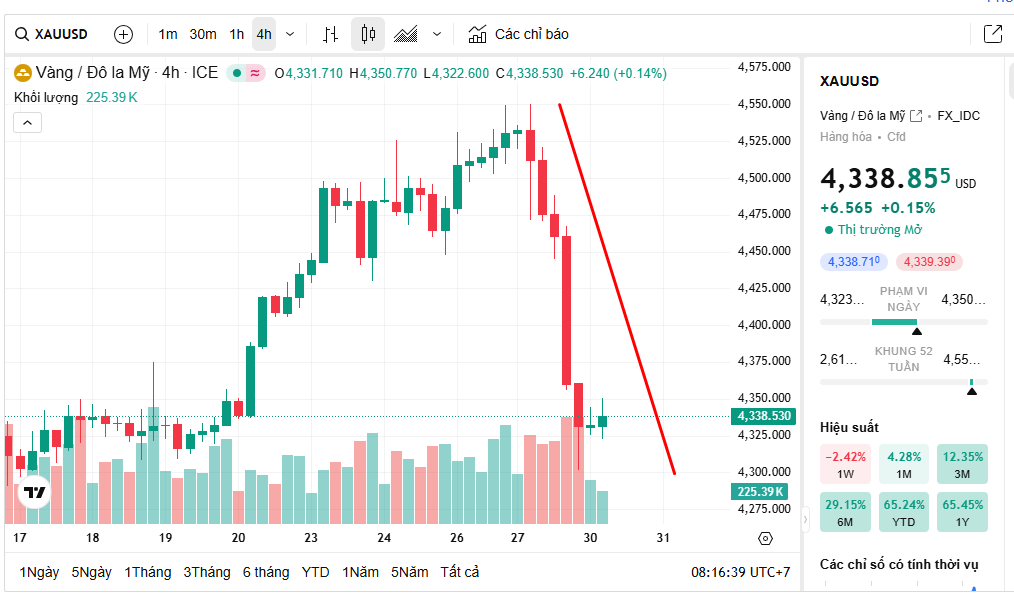
The real alarm bell: CME raised margin requirements → forced deleveraging
Ahead of the Dec 29 session, CME Clearing released an advisory adjusting performance bond / margin levels across several metals contracts, stating the change was part of its volatility review and would take effect after the close on Dec 29, 2025.
Why does a margin change matter so much?
Futures markets run on collateral + leverage.
When margin requirements rise, traders must either:
post additional collateral to maintain their positions, or
reduce / close positions to bring margin usage down.
When markets are already “stretched” after a sharp rally, this often becomes the catalyst for forced selling, as leveraged players cut exposure. Multiple major outlets described the margin hike as a key driver behind the broad selloff across gold and silver.
Profit-taking after a “parabolic” run + year-end liquidity effects
Before the drop, gold and especially silver had surged aggressively and repeatedly printed record highs. Several analyses pointed to euphoric / speculative conditions and a market that had become one-sided.
Once the margin shock hit, the typical chain reaction follows:
Leveraged traders are forced to sell first.
Investors sitting on large gains use the event as a “reason” to lock profits.
Stops and systematic/algorithmic triggers kick in, accelerating the move.
On top of that, year-end liquidity is often thin, especially after holidays. With fewer bids in the market, prices can gap and slide faster than usual. Financial Times also highlighted thin liquidity as a factor that amplified the reversal.
Strong U.S. housing data → mild risk-on tone + a reset in rate-cut expectations
That same day, the U.S. reported pending home sales up 3.3% in November, well above the +1.0% consensus forecast, with the NAR describing it as the strongest seasonally adjusted performance in nearly three years.
The message from the data was constructive:
The housing market may be stabilizing.
Affordability has improved somewhat as mortgage rates eased and income growth outpaced home-price growth (per NAR/Reuters).
By itself, this kind of report rarely causes a 4–5% collapse in gold. But in a market already extended and with leverage being squeezed it can become a convenient macro “excuse” for fast profit-taking and a more risk-on tilt.
A sharp drop doesn’t automatically mean the long-term trend is broken
Several sources framed the move as a violent pullback / consolidation after a vertical rally, rather than an immediate “trend collapse.”
Zooming out, gold’s broader 2025 backdrop has still been supported by themes such as:
shifting interest-rate expectations,
safe-haven demand,
and structural forces tied to geopolitics and reserve diversification (drivers Reuters has cited in prior record-setting moves).
In other words: a brutal correction does not erase the bigger narrative but it does remind traders that when markets become leveraged and euphoric, a technical trigger (like a margin hike) can cause short-term dislocations.