 15
15Investor
January 9, 2026
The Psychology Mistakes That “Blow Up Accounts” and How Ebila AI Helps You Break the Cycle

You lose because you make decisions while you’re emotional. The market doesn’t need you to “guess right” it only needs you to lose discipline at the wrong moment; and most costly mistakes start with a familiar thought: “This time will be different…”. This blog breaks down the most common psychological traps (FOMO, panic, overtrading, confirmation bias, holding losers too long…) and offers a practical approach: shift from “emotion” to a “system” with Ebila AI.
FOMO: the hidden tax on investors (and why it makes you buy the top)
FOMO is the fear of missing out. When price rallies fast, headlines flood in, and group chats start hyping, your brain flips into reflex mode: “Get in now or you’ll miss it.” The problem is FOMO doesn’t come from analysis it comes from insecurity: fear of being left behind, fear that others will profit while you don’t. Typical signs: you enter because “it’s already moving” instead of waiting for confirmation; you chase strong candles and buy right where the market is most likely to take profits; you increase position size because you want to “make it big” without a risk plan. The classic outcome: you become the buyer in supply (short-term tops) and the seller in demand (short-term bottoms) simply because you can’t tolerate volatility.
How Ebila AI helps solve FOMO
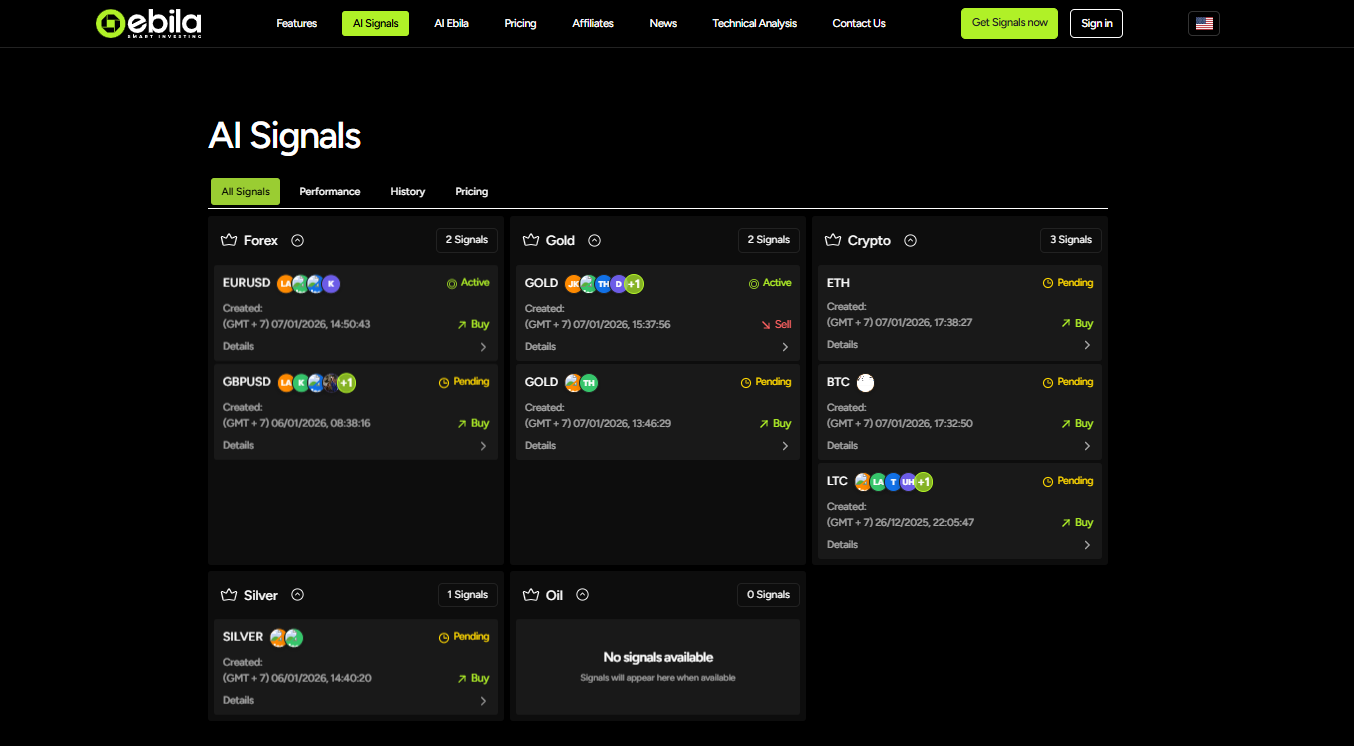
Ebila AI helps you change the question from “Is it running yet?” to “Where is the confirmed decision point?” With a clear signal/entry-condition framework, you don’t need to chase price you wait for the market to “show evidence” before acting. More importantly, Ebila AI helps you build a plan before the move happens, so when opportunity appears, you execute a process not a feeling.
Panic: when small volatility turns into big mistakes
Panic hits when price moves against your expectation and you feel you’re “losing control.” Your body reacts as if it’s real danger: faster heartbeat, restlessness, checking charts nonstop, inability to sit still. In that state, you tend to make two expensive decisions: cutting losses too early (out of fear) or refusing to cut when you should (out of hope). Ironically, many investors do both in the same cycle: stop out at the bottom, then FOMO back in near the rebound top.
How Ebila AI reduces panic
When your decisions are driven by clear conditions, you feel less need to “react” to every candle. Ebila AI brings you back to discipline: define risk in advance, know exactly where you exit if you’re wrong, and stop “praying” with your account. Once risk is quantified and capped, your psychology stabilizes because you know the worst-case scenario and you’ve accepted it before entering.
Holding losers: fear of admitting you’re wrong and the cost of “hope”
Holding losers often begins with a very human thought: “It will come back.” But the market doesn’t owe you a rebound. When you hold losers, you tend to move stop-losses, average down while emotionally compromised, or increase size hoping “a small bounce” will bail you out. This is how many accounts die: not from one wrong trade, but from turning one wrong trade into an uncontrolled wound. Cutting a loss doesn’t make you lose money; cutting a loss preserves your ability to keep playing.
How Ebila AI helps you escape holding losers
Ebila AI reinforces the mindset of “controlled wrong”: every trade needs a clear invalidation level and risk that fits your capital. When you define “where wrong is truly wrong” up front, you reduce self-deception through hope. Most importantly, when the process requires position sizing and stop execution by scenario, you stop renegotiating with the market while your emotions are weak.
Why discipline dies not because you’re weak but because you’re tired
News runs 24/7, price moves every minute, and life consumes your mental bandwidth. When you’re tired, humans choose the easiest decision: trade by feeling, follow the crowd, or “just take a trade and be done.” That’s why many investors fail not due to lack of knowledge, but due to lack of structure especially when energy is low. You can’t become a smart investor if every decision costs you time, mental space, and emotions.
How Ebila AI reduces the load
Ebila AI reduces the psychological “cost” of investing by turning decisions into a clear sequence: filter context, wait for confirmation, manage risk, execute by scenario. When you don’t have to process everything emotionally and constantly, you become more consistent, calmer, and sustainable. Instead of fighting the market with willpower, you rely on a system to protect your discipline.
The market always offers opportunities but it only rewards the prepared. When you shift from emotion to system, you stop chasing the market; you wait for confirmation and then act. Ebila AI is built to help investors do exactly that: reduce FOMO, reduce panic, reduce overtrading, control risk, and build a disciplined decision-making habit.