 15
15News
February 5, 2026
Silver Slides Again After a Brief Bounce: What’s Driving This Extreme Volatility?
.webp&w=3840&q=75)
After a short-lived two-day rebound, silver prices plunged again on Thursday, February 5, 2026. Reuters reported that spot silver was down nearly 15% at one point, as thin liquidity and broad risk-off positioning amplified the selloff across markets.
What matters here is not only “how much silver fell,” but why silver is behaving more like a highly speculative asset than a metal moving in line with normal supply-and-demand dynamics.
Where is this selloff happening in the bigger picture?
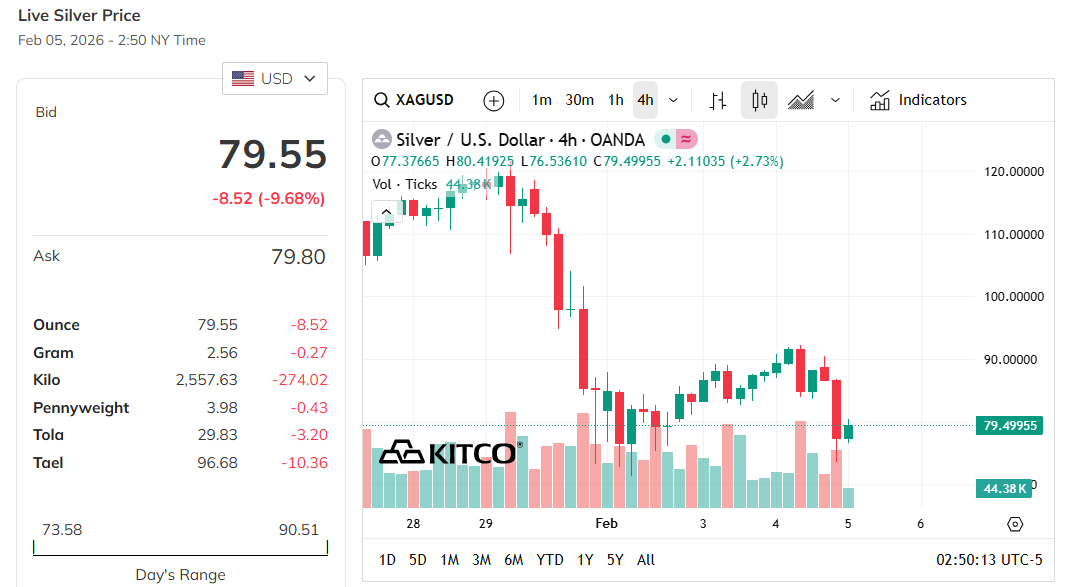
Jan 29, 2026: silver hit a record high around $121.64/oz.
Immediately after: silver lost more than a quarter of its value in a single day, as technical selling and stop-loss orders triggered a cascading move (Reuters described a “snowball” effect).
Feb 2, 2026: Reuters noted silver traded down sharply and hovered around $76–77/oz during the session as selling pressure intensified.
Feb 5, 2026: after a brief technical rebound, silver fell nearly 15% again, with “risk-off” sentiment returning and thin liquidity magnifying the decline.
As for the scale of the run-up that preceded the drop: Reuters reported silver gained about 147% in 2025 and rose as much as 71% in January 2026 before reversing.
Why did silver fall so hard? Four easy-to-understand drivers
Heavy leverage + crowded speculative positioning → reversals turn into “domino effects”
During a hot rally, many traders add positions using leverage and chase price. When the market turns:
stop-losses get triggered,
technical selling accelerates,
and the decline itself triggers even more forced selling.
Reuters described this clearly: once prices started dropping, the move compounded into a “snowball” effect bigger and faster with each leg down.
Higher margin requirements → forced liquidations
Following the sharp selloff, CME Group raised margin requirements for precious metals contracts; Reuters noted this added to selling pressure. (Reuters)
CME’s margin notice (issued Jan 30, 2026, effective after the Feb 2, 2026 session) shows the exchange increased “performance bond/margin” levels to contain volatility risk. (CME Group)
In simple terms: higher margin = more cash needed to keep positions open. Traders using high leverage who cannot add funds are forced to close often at the worst possible moment adding further downward pressure.
A stronger dollar + a more “hawkish” Fed narrative → headwind for precious metals
On Feb 5, Reuters reported the U.S. dollar was near a two-week high, which tends to pressure commodities priced in USD (they become more expensive for holders of other currencies). At the same time, a more hawkish monetary-policy outlook reduces the appeal of non-yielding assets like gold and silver.
Thin liquidity → volatility gets “magnified”
Reuters also highlighted that in thin-liquidity conditions, losses in one market can spill into others as investors cut exposure broadly. This is why silver can “gap” violently within hours moves that look outsized compared with fundamentals.
Why is silver getting hit harder than gold?
Both are precious metals, but silver often swings more because:
its market depth and liquidity are typically thinner,
it is more easily dominated by leveraged/speculative flows,
and in FOMO phases it can become “meme-like” faster than gold.
Reuters also pointed to retail-driven hype and a degree of “memefication” as part of the momentum behind the recent blow-off rally.
This latest leg down in silver isn’t simply “weak demand.” It looks more like a leveraged unwind: stop-loss chains, higher margin requirements, thin liquidity, and risk-off sentiment are reinforcing each other. In this kind of environment, the most rational approach is to understand the market mechanics, not just react to daily percentage moves