 15
15Worldwide
August 25, 2025
Record Savings – The New Driving Force Behind China’s Stock Market Boom
The Big Picture: Household Deposits at Historic Highs
For decades, savings have been a cornerstone of Chinese household financial behavior. Yet by 2025, a new record has been set, with total household deposits surpassing 160–163 trillion yuan, equivalent to roughly $22 trillion. Notably, this massive pool of liquidity is no longer being channeled into real estate as in the past, as the property market continues to decline, eroding asset values and generating mounting risks. At the same time, deposit rates have fallen below 1%, making bank savings increasingly unattractive. Against this backdrop, Chinese households are being pushed to seek new avenues of return, with equities emerging as the most prominent destination.
China’s historically high savings rates stem from a combination of factors: inadequate social safety nets prompting precautionary savings; demographic shifts, marked by an aging population; high and unpredictable costs for housing and healthcare. China’s gross domestic savings stand at over 43% of its GDP, according to World Bank data.That cash hoard, combined with structurally low equity ownership means retail investors in China could keep driving markets higher, according to experts.
The Capital Shift into Equities
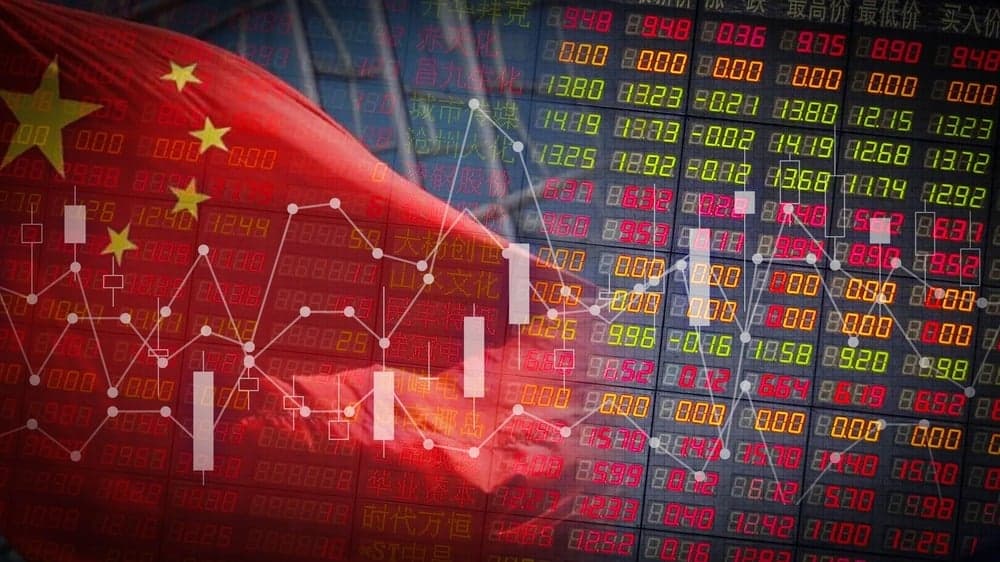
This transformation in investment behavior is vividly reflected in market performance. The CSI 300 Index, tracking the largest companies listed in Shanghai and Shenzhen, has climbed nearly 22% from its April 2025 trough. Meanwhile, margin financing has surged to $292 billion, underscoring investors’ growing risk appetite. Mutual fund issuance has also jumped 132% year-on-year, signaling a structural shift from speculative trading toward more professionalized investment vehicles. As a result, China’s total stock market capitalization has exceeded RMB 100 trillion (approximately $ 13.9 trillion), the highest level in nearly a decade. This underscores how household asset reallocation has become a primary catalyst powering the current equity rally.
Policy Support and the Role of Reforms
In addition to household liquidity, government policy has played a pivotal role in reinforcing this momentum. Beijing has introduced measures to improve market liquidity and encourage deeper participation from insurers and institutional investors. Programs such as Stock Connect, linking Shanghai and Shenzhen with Hong Kong, have expanded cross-border capital flows and boosted both domestic and international investor confidence. Furthermore, the temporary suspension of U.S.–China tariff measures has alleviated geopolitical uncertainty, paving the way for foreign capital inflows into Chinese equities. Crucially, the current rally is not solely built on speculative momentum but is also being led by strategic sectors such as artificial intelligence, semiconductors, and renewable energy areas the Chinese government has identified as long-term growth pillars.
Risks and Structural Challenges
Despite the impressive rally, significant risks remain embedded in the macroeconomic backdrop. China continues to face structural headwinds, including sluggish domestic consumption, weak household spending relative to GDP, and an unresolved property sector crisis. If equity valuations rise primarily on the basis of FOMO-driven sentiment rather than genuine earnings growth, the risk of a sharp market correction is substantial. Once an asset bubble forms and bursts, the fallout could extend beyond individual investors to the broader economy. As such, prudent portfolio allocation and disciplined risk management are essential to navigate this volatile environment.
A New Flow of Household Capital
China’s record household savings are reshaping the nation’s investment landscape. Where real estate once dominated, equities have now emerged as the most compelling alternative. The convergence of excess household liquidity, policy support, and optimism in strategic industries has created fertile ground for a stock market boom. However, the long-term trajectory ultimately depends on substantive reforms and the underlying health of the economy. For investors, this moment represents both an unprecedented opportunity and a significant test of risk tolerance. In essence, China’s stock market surge in 2025 is not merely a financial rally it is a litmus test for the resilience, foresight, and adaptability of both the nation and its investors.
(Source: CNBC)