 15
15News
October 15, 2025(Updated: October 15, 2025)
LVMH Rebounds in Q3 2025: Signs of Recovery and Challenges Ahead

A strong stock rally and renewed optimism
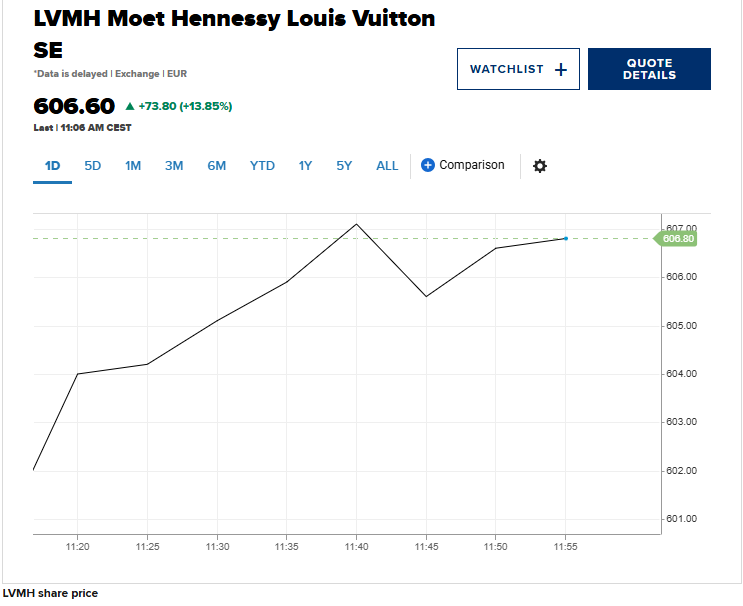
On October 15, 2025, shares of LVMH Moët Hennessy Louis Vuitton soared by 13% in a single trading session after the world’s largest luxury group reported its first quarterly sales growth of the year a 1% organic increase year-on-year .
The news not only brought relief to shareholders but also sparked optimism across the broader luxury sector, which has been weighed down by sluggish demand, currency volatility, and a weaker global economy.
Breaking down LVMH’s Q3 2025 performance
A modest +1% organic growth that matters
According to the company’s official statement, organic revenue which excludes the impact of currency fluctuations and acquisitions rose 1% compared to the same period last year .
While the gain seems small, it marks a turning point after several quarters of decline following the post-COVID luxury slowdown in 2024. However, foreign exchange movements weighed heavily, shaving roughly 5% off reported revenue for the quarter.
Business segments showing resilience
Several divisions helped drive the positive surprise:
Selective Retailing — which includes Sephora and high-end department stores posted about 7% growth, supported by stronger local demand.
Perfumes & Cosmetics grew around 2%, fueled by new product launches and strong momentum at Dior and Guerlain.
Watches & Jewelry also rose 2%, showing solid traction despite soaring gold prices that increased input costs.
Wines & Spirits turned slightly positive after struggling earlier this year.
By contrast, Fashion & Leather Goods home to Louis Vuitton, Dior, Fendi, and Celine still fell 2%, though that’s a major improvement from previous quarters that saw declines of nearly 9%
This narrowing decline suggests stabilization in the group’s flagship division a critical signal for investors.
Cre: CNBC
Asia and the U.S. drive recovery
The most encouraging factor came from Asia, particularly China, where consumer demand finally rebounded after a prolonged slowdown .
Revenue in China and other Asian markets (excluding Japan) turned positive in Q3, offsetting softer performance in Europe and Japan. The United States also delivered around 3% growth, as domestic consumption remained healthy .
Europe and Japan, however, continued to struggle amid fewer tourists and unfavorable currency effects.
Why the market reacted so strongly
The 13% stock rally was not only a reaction to the numbers but also to a psychological turning point in investor sentiment. Analysts pointed out several key drivers
Investors believe the worst may be over for the luxury sector after the first positive quarter of 2025.
The resilience of retail and beauty segments reduces dependency on fashion cycles.
China’s recovery serves as a vital lifeline for the group’s growth trajectory.
LVMH’s major brands notably Louis Vuitton and Dior continue to attract strong consumer interest through creative store concepts and experiential marketing.
At the same time, risks persist. Currency headwinds, record-high gold prices, and a difficult comparison base from late 2024 could restrain future growth momentum
Challenges that remain on the horizon
High gold prices pressuring jewelry margins The surge in gold above $4,000/oz adds cost pressure on Tiffany & Co. and Bulgari.
Currency fluctuations — LVMH reported a –5% FX impact on consolidated revenue this quarter.
Tough year-on-year comparisons — Q4 2024 was strong, meaning the group faces a higher benchmark in the next report.
Sustainability of the rebound — A slowdown in Chinese demand or broader global consumption could stall the momentum.
Need for innovation and relevance — Luxury consumers are increasingly drawn to sustainable, personalized experiences; maintaining brand desirability will be essential.
Broader implications for the luxury industry
LVMH’s Q3 2025 results mark a symbolic inflection point: after months of sluggish performance, the world’s top luxury group is showing early signs of stabilization. The rebound has rekindled optimism that the entire sector may be entering a new, slower but healthier growth cycle.
Five key takeaways for investors and industry watchers:
Diversification matters — Relying solely on high-fashion and leather goods is risky; cosmetics and retail are key shock absorbers.
Currency and input cost management — Gold, FX, and logistics costs remain crucial variables for profitability.
China is still the cornerstone — Its recovery rhythm directly influences global luxury sales.
Innovation drives retention — Creative storytelling, in-store experiences, and sustainability will define next-gen luxury success.
Keep an eye on Q4 2025 and FY 2026 — This quarter could be the first “light at the end of the tunnel,” but LVMH still needs to prove sustained growth.
The 13% surge in LVMH stock is more than a market reaction it’s a vote of confidence that the global luxury leader may have navigated past its toughest stretch. The group’s diversified portfolio, strong brand power, and improving Chinese demand create a solid base for cautious optimism.
Yet, the journey ahead won’t be smooth: high costs, shifting consumer preferences, and global economic uncertainty remain formidable challenges.
If this modest rebound continues, 2026 could mark not just a recovery for LVMH, but the beginning of a new chapter for the entire luxury industry.