 15
15Business
March 10, 2026
How Loss Aversion Affects Investors’ Decisions

Loss Aversion and Investors’ Decision-Making
In the field of finance and investment, loss aversion is considered one of the most important psychological factors influencing investors’ decisions. It not only constrains investment behavior but can also lead to serious mistakes in financial strategy.
This article will provide a detailed analysis of loss aversion, its psychological roots, its impact on investment decisions, and ways to overcome it in order to become a more rational investor.
What is Loss Aversion?
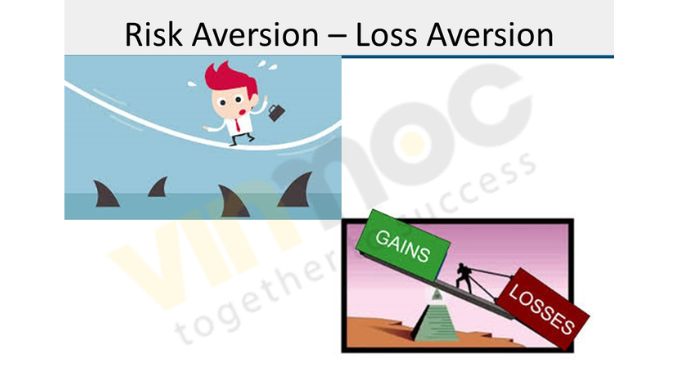
Loss aversion was introduced by Daniel Kahneman and Amos Tversky in Prospect Theory. It refers to the tendency for people to feel the pain of a loss more strongly than the pleasure of an equivalent gain. In other words, losing one dollar causes roughly twice as much emotional pain as the joy of gaining one dollar.
Manifestations of Loss Aversion in Investing
Loss aversion is clearly reflected in many everyday investment decisions:
Holding losing stocks for too long
Many investors fall into the trap of holding onto losing stocks in the hope that prices will recover, instead of accepting the loss and reallocating their capital to better opportunities.
For example, Mr. Minh bought ABC shares at VND 100,000 per share. After the price fell to VND 80,000, he decided not to sell because he believed the stock would rebound. In the end, however, the price dropped even further to VND 50,000.
Selling profitable investments too early
Fear of losing unrealized gains when the market moves against expectations often causes investors to sell too soon, preventing further potential growth.
For example, Ms. Ha invested in XYZ shares and earned a 15% return. However, fearing that she might lose her gains, she sold immediately instead of holding the stock for the longer term. Afterward, the stock rose by another 30%.
Avoiding risk altogether
Investors often shy away from risky decisions even when the long-term return potential is highly promising.
For example, Mr. Nam had an opportunity to invest in a promising startup, but he chose not to participate because he feared losing money, while other investors earned substantial returns a few years later.
Panicking when the market declines
When the market falls, investors often sell in panic rather than relying on analysis and maintaining discipline.
For example, during a short-lived downturn, investor Binh panicked and sold his entire portfolio, even though many of the stocks later recovered quickly.
The Impact of Loss Aversion on Investment Decisions
Loss aversion influences investors’ decisions in several negative ways:
Reducing portfolio efficiency
When investors focus too much on avoiding losses, they often miss opportunities to shift their assets into more effective investments. Holding underperforming assets for too long not only causes financial losses but also limits future growth potential.
Increasing stress and anxiety
Decisions involving the possibility of losses often create feelings of tension and insecurity. Over time, this can affect investors’ mental well-being and make it harder for them to assess situations objectively.
Creating an unstable financial future
When investment choices are driven by loss aversion, investors are more likely to miss long-term wealth-building opportunities. Instead of investing in assets with strong growth potential, they tend to rely on safer but less effective choices, which may lead to financial insecurity in the future.
How to Overcome Loss Aversion
Clearly define your investment goals
Set clear long-term financial objectives and place them above short-term emotions. Create a detailed investment plan and closely monitor your progress toward those goals.
For example, if you are investing to achieve retirement in 20 years, focus on long-term returns rather than being shaken by short-term market fluctuations.
Allocate your portfolio wisely
Minimize risk by diversifying your investments across different asset classes. A portfolio that includes stocks, bonds, real estate, and mutual funds can help reduce psychological pressure.
For example, allocating 50% to stocks, 30% to bonds, and 20% to real estate can help maintain a balance between risk and return.
Stick to your plan
Develop a long-term investment strategy and follow it regardless of short-term emotions. Financial apps and tools can help you maintain this discipline.
For example, using an app to automate monthly investments can be more effective than making decisions manually at every moment.
Learn to accept losses
Treat every loss as a valuable lesson rather than a failure. Remember that losses can be viewed as part of the learning cost of investing.
For example, when you lose money on an investment, analyze the reasons behind the outcome so you can improve your strategy in the future.
Use technology
Track your portfolio and analyze data with modern investment tools to reduce subjectivity. These tools provide objective information and help you make decisions based on analysis rather than emotion.
For example, using portfolio-tracking software to receive alerts about unusual market movements can help you stay calm instead of panicking over negative news.
In Conclusion
Loss aversion is a major psychological challenge for investors. However, if investors are able to recognize and overcome this bias, they can make wiser decisions, reduce costly mistakes, and improve their chances of long-term investment success.