 15
15News
December 9, 2025
How Fed Rate Cuts Are Quietly Rewriting the Case for Dividend Stocks
The backdrop: Falling rates, changing rules
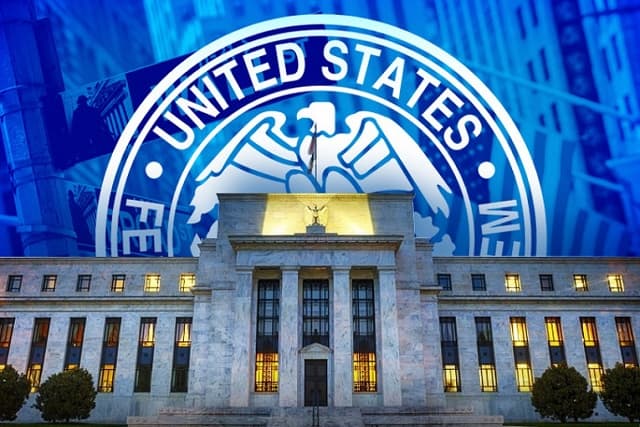
After hiking rates from near 0.25% to a peak of 5.25%–5.5% during 2022–2023 to fight inflation, the Fed began cutting in late 2024. By October 2025, the policy rate had already moved down into the 3.75%–4% range, and many economists expect another 0.25 percentage-point cut at the December meeting, marking the third cut this year.
On top of that, politics are now part of the story. Fed Chair Jerome Powell’s term ends in May 2026. President Donald Trump has repeatedly signaled he wants a more “dovish” chair on interest rates and has said he plans to name a successor in early 2026. That means markets are not only parsing every word of the Fed’s statements, but also trying to anticipate a new policy style for the next few years.
Where is the cash “hiding” now?
Two years of high interest rates pushed huge amounts of money into short-term, ultra-safe assets: money market funds, certificates of deposit (CDs), and short-term U.S. Treasuries.
By early December 2025, assets in U.S. money market funds had climbed to around $7.65 trillion.
For many investors, these vehicles have been an attractive “parking lot” for cash: low volatility, easy access, and yields that were meaningfully higher than traditional bank deposits.
Compared with a standard savings account, the yields on these products are still appealing. But if the Fed keeps cutting and we move further into a lower-rate environment in 2026, the real yield (after inflation) on these “safe” assets will gradually shrink.
That raises a natural question: will income-seeking investors be willing to step out of their comfort zone to pursue better total returns?
Why dividend stocks are back in focus
When interest rates fall, the main competitors to dividend stocks – deposits, CDs, money market funds, and short-term Treasuries all see their yields drift lower. That automatically makes dividend-paying stocks look relatively more attractive.
Regular income
The average dividend yield of the S&P 500 is only about 1.1%, but many high-quality companies pay 2–3% or more.
Once money-market yields fall into the low-3% range and trend downward, the gap between “risk-free cash” and dividend yields is no longer dramatic.
Capital appreciation potential
A bond that matures simply gives you back your principal.
A stock, on the other hand, can appreciate as the business grows earnings or as the market re-rates its valuation in a lower-rate environment.
Partial inflation protection
Companies with durable business models often have the ability to raise their dividends over time. That means the cash flow you receive as a shareholder doesn’t remain fixed forever – it can gradually grow and offset part of inflation’s impact.
A classic example is the Dividend Aristocrats group – S&P 500 companies that have increased their dividends for at least 25 consecutive years.
Procter & Gamble (P&G) has paid dividends for more than a century and has raised its dividend for 69 straight years – a powerful signal of stability and cash-flow strength.
Dover also boasts a 60-plus-year streak of dividend increases, putting it among the longest records in the market.
In a falling-rate environment, names like these suddenly look more attractive to income investors: you get a steady dividend plus the possibility of long-term capital gains, instead of simply holding cash that earns less each year.
Not all dividend stocks are “safe havens”
That said, stocks always carry higher risk than CDs, money market funds, or Treasuries:
Share prices can drop sharply with market sentiment, leaving you with a capital loss even if dividends continue.
A very high dividend yield can be a red flag: the market may be pricing in a future cut to the dividend or a deterioration in the company’s fundamentals.
When selecting dividend stocks, investors need to look beyond surface-level numbers:
Payout ratio
How much of the company’s earnings are being paid out as dividends? An excessively high payout ratio, combined with slow earnings growth, is a classic setup for a future dividend cut.
Cash flow and leverage
Does the business generate enough free cash flow to invest for growth and still pay dividends? Is the balance sheet healthy, or is the company weighed down by heavy debt?
Dividend track record
Has the company maintained and raised its dividend through tough periods – such as 2020 or the 2022–2023 high-rate cycle?
Many professional portfolio managers (including charitable or endowment funds) prefer high-quality companies with moderate, sustainable, and consistently growing dividends rather than chasing eye-catching yields. In that framework, dividends are like being “paid to wait” – they help investors stay patient with a long-term thesis.
A practical approach for income-focused investors
If the Fed continues cutting rates and yields on safe-haven assets move lower, a gradual shift of some capital into dividend-paying equities is a reasonable scenario.
A cautious roadmap might look like this:
Don’t go all-in.
Keep a portion of your capital in cash or money market funds to cover 6–12 months of expenses and provide a buffer against shocks.Rotate step by step.
Reallocate gradually into companies with long dividend histories, clear business models, stable cash flows, and sensible levels of debt.Reinvest dividends if you don’t need the cash.
Using a dividend reinvestment plan (DRIP) allows you to harness the power of compounding: dividends buy more shares, and those shares generate more dividends over time.
In the end, Fed rate cuts are not a guarantee that dividend stocks will outperform everything else. What matters more is aligning your portfolio with your income goals and risk tolerance, building a diversified mix, and choosing businesses with the financial strength to both pay reliable dividends and grow earnings over many years.
That is where dividend investing goes from being just an income strategy to becoming a long-term wealth-building tool in a world of gradually falling interest rates.