 15
15Business
November 5, 2025
Gold Prices Rebound as the Sideways Phase Extends Longer

Gold slumped on Tuesday as the U.S. dollar climbed to a three-month high, with traders awaiting upcoming U.S. economic data for clues on the Federal Reserve’s policy path.
Spot gold briefly fell to as low as $3,929/oz. By Wednesday, however, the metal rebounded sharply to $3,970/oz (08:00 GMT) as investors bought the dip after the steep decline.
Pressure from a stronger dollar
The U.S. Dollar Index rose to a three-month peak, making gold more expensive for holders of other currencies. Part of the dollar’s strength reflects fading market expectations for another Fed rate cut in December.
Although the Fed trimmed rates by 25 basis points last week, Chair Jerome Powell suggested this could be the final cut of the year. According to CME’s FedWatch tool, the probability of a further cut at the Dec. 9–10 meeting has dropped to 71%, from over 90% a week earlier.
Data delays keep markets waiting
The U.S. government shutdown is delaying the release of key economic reports, forcing investors to lean on private-sector data such as the ADP Non-Farm Employment report due Wednesday.
Meanwhile, Fed officials have voiced mixed views, underscoring a lack of internal consensus on how to navigate the current “data gap.”
Technical view: the (b) wave likely not yet formed
Despite gold’s decline of more than $100 from the recent $4,046 high, downside momentum appears limited. After reassessing the wave structure, there is a strong chance the (b) wave (white) has not yet formed, implying a prolonged retest of the Head-and-Shoulders neckline.
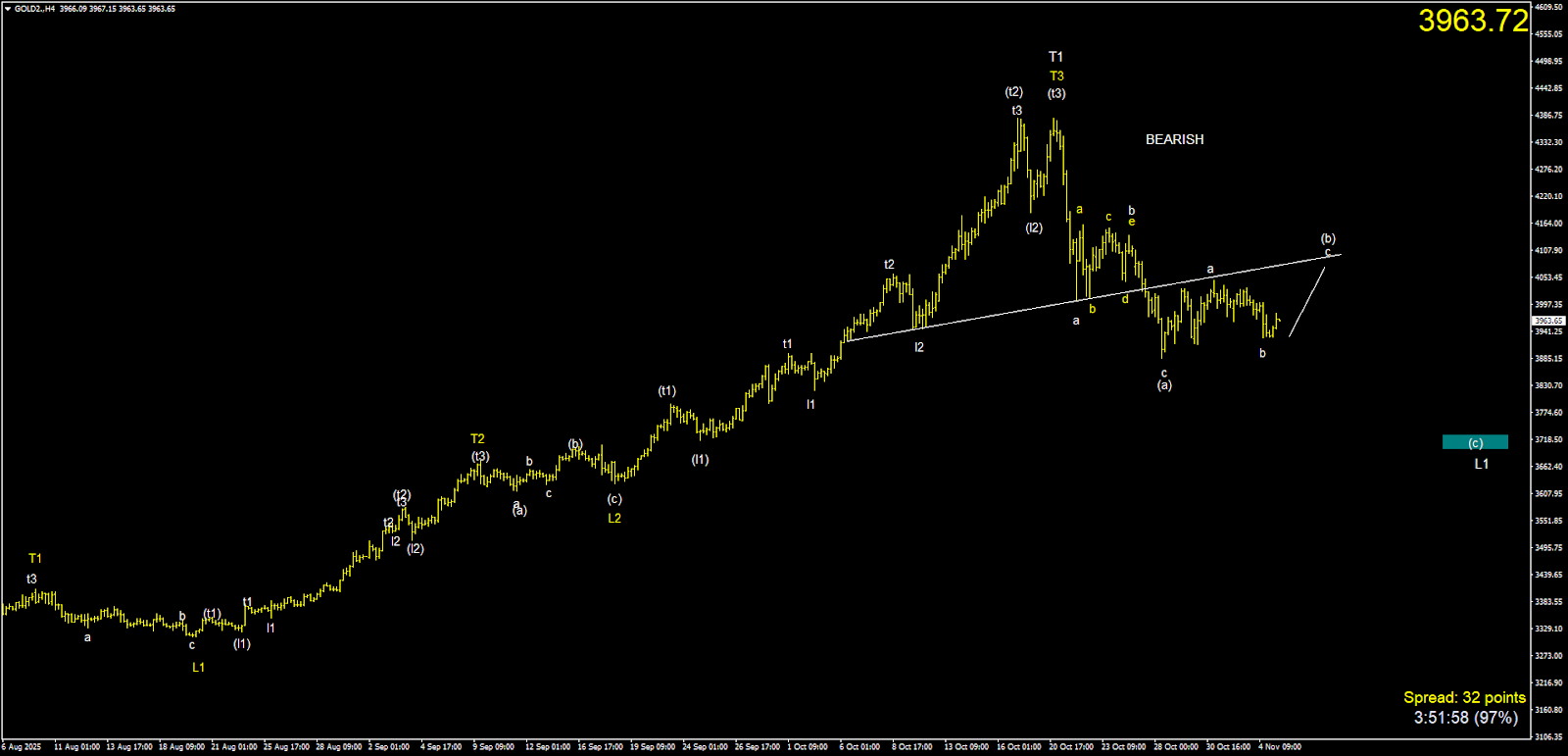
At present, gold is moving from white wave (a) to white wave (b), following a three-wave substructure a–b–c. The minor wave b appears to have formed around $3,929/oz, setting the stage for an upward move from b → c, which could complete wave (b) before the next downward trend resumes.
With this movement, gold is trading within the $3,930 – $4,030 range, forming a broad $100 sideways channel.
Strategy: Patience and Flexibility
The current phase is a true test of investor patience. As gold continues to fluctuate within a wide sideways range and markets await clearer signals from the Fed and U.S. data, short-term trading strategies tend to be more effective than long-term holding positions.
Medium- and long-term investors should wait for a more confirmed trend before entering the market to ensure safer entries.
Stay updated with Ebila AI for continuous market insights and explore the most effective short-term trading strategies helping you seize opportunities even during this “calm before the storm” phase.
If you find Ebila AI’s analysis valuable, share this article so more investors can gain a clearer, more objective perspective on the market.