 15
15Worldwide
October 9, 2025
Ferrari’s EV Reality Check: Shares Slide 13% as 2030 EV Target Is Halved — What It Means
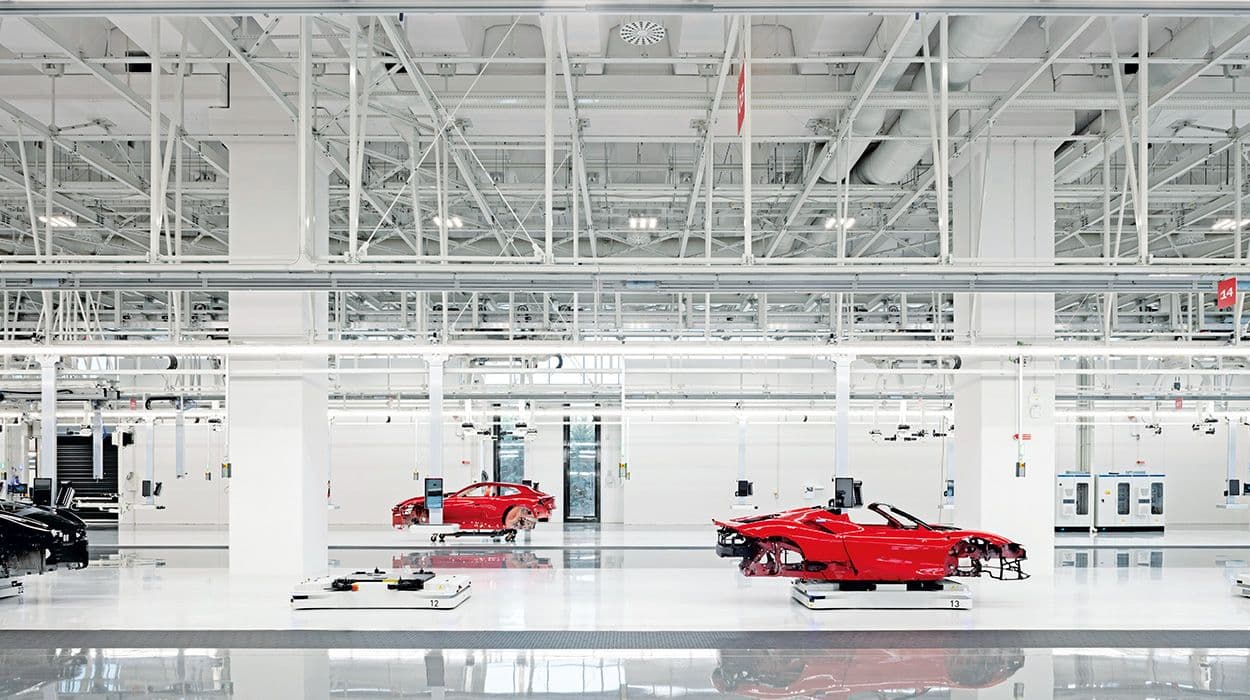
On October 9, 2025, Ferrari delivered a double-edged update at its Capital Markets Day: the brand unveiled its first all-electric model, Elettrica, while cutting its 2030 fully electric mix target to 20% (from 40% previously). Investors didn’t cheer. The stock tumbled about 13% intraday, the steepest drop since 2016, as markets digested a slower-than-expected EV pivot from Maranello.
Below is a clear breakdown of what changed, why the market reacted so sharply, and how to think about Ferrari’s strategy from here.
What Ferrari Announced
Elettrica, the first Ferrari EV. The company “lifted the hood” on its EV platform (battery pack, motors, and underpinnings). The full production car reveal is still to come, but the technology direction is now public.
2030 mix reset. Ferrari now targets 20% BEV / 40% hybrid / 40% ICE by 2030 — effectively halving the fully electric ambition it had guided to previously.
Upgraded near-term financials. Guidance for 2025 was raised: at least €7.1bn in revenue and €2.72bn in adjusted EBITDA (implying ~38.3% margin), pulling forward milestones that had been expected later.
Model cadence & personalization. Ferrari plans to launch an average of four new models per year from 2026–2030 and expand its high-margin Tailor Made program (e.g., new hubs in Tokyo and Los Angeles).
No second EV before 2028. Management signaled the ultra-luxury EV market remains thin, so Ferrari will pace the rollout until technology and customer readiness align.
Why the Stock Fell 13%
The EV bar was set high — and then lowered
Investors had priced Ferrari as a best-in-class luxury name that could scale EVs without sacrificing margins. Cutting the BEV share target from 40% to 20% by 2030 undercuts that narrative and implies a slower curve to a pure-electric future.
A deliberate “ICE still matters” message
Keeping 40% ICE in the 2030 mix is a strong signal that Ferrari sees enduring demand for combustion. That may be rational for the brand’s identity, but it reads as conservative on tech leadership compared with peers accelerating EV plans.
Brand-experience risk
Ferrari’s magic is visceral: sound, response, and the emotional arc of an engine. Management has hinted that current technology makes it hard to recreate that signature experience in a battery-only format today. The reduced EV push is, in part, a defense of brand equity — but it also stokes concern that Ferrari could lag on EV innovation.
Sentiment and positioning
Heading into the event, the stock had been rich on expectations. When the EV trajectory was dialed back, profit-taking snowballed, producing the sharpest single-day decline in nearly a decade.
Can Ferrari Navigate This Shift?
Despite the shock, there are credible offsets if the company executes well.
A more realistic glidepath. Right-sizing the BEV mix reduces execution risk and capex strain. A balanced tri-portfolio (ICE/Hybrid/BEV) better matches the current ultra-luxury demand curve and buys time for battery, weight, sound, and thermal breakthroughs.
Leaning into personalization. Tailor Made is a margin jewel. Deep customization strengthens loyalty and pricing power — a proven Ferrari edge that is technology-agnostic.
Healthy financial engine. With raised 2025 guidance, potential for higher dividends/buybacks, and a backlog characterized by scarcity, Ferrari retains enviable economics even as it staggers EV timing.
Scarcity as strategy. Ferrari’s orderbook and curated allocations mean it sells exclusivity as much as horsepower. That scarcity can cushion cyclical shocks and reduce the need to chase volume in a nascent EV supercar niche.
Key Risks to Watch
Execution on Elettrica. Any slippage in performance, range, thermal management, charging, or the “Ferrari feel” will be magnified by the brand’s standards.
Competitive heat. Lamborghini, Aston Martin, Porsche, Rimac, and emerging players are intensifying the halo EV race.
Input costs & battery economics. Battery material volatility (lithium, nickel), pack costs, and supplier dynamics can squeeze margins.
Brand dilution risk. Missteps that compromise the core Ferrari experience could alienate the most discerning clients.
Macro sensitivity. Ultra-luxury demand is resilient but not immune to global slowdowns, liquidity cycles, or market drawdowns.
How Investors Might Frame It (Not Investment Advice)
Avoid knee-jerk capitulation. If you believe Ferrari’s moat is brand + scarcity + margins (not EV unit share), the reset can be viewed as pragmatism, not capitulation. Averaging in only makes sense with a long horizon and strict risk budget.
Position sizing matters. Treat RACE as a high-quality but cyclical luxury/auto hybrid a satellite allocation rather than a core holding for most portfolios.
Track the milestones. Watch the full Elettrica reveal, early client feedback, order intake, hybrid mix progression, and capital returns (dividends/buybacks).
Mind the peers. Relative execution vs. Porsche/Lamborghini/Aston Martin on EV range, weight, charging, and driving character will set the competitive bar.
Respect the time value of narrative. If Ferrari convinces clients that Elettrica is authentically “Ferrari,” sentiment can flip faster than spreadsheets.
Ferrari’s decision to halve its 2030 BEV target and the ensuing 13% sell-off don’t spell the end of the story — they mark an inflection point in how a blue-chip luxury brand approaches electrification. The company is choosing brand fidelity and margin discipline over rushing into a still-forming ultra-luxury EV market.
Success now depends on execution: delivering an EV that feels like a Ferrari, pacing the rollout intelligently, and compounding the high-margin ecosystem (Tailor Made, limited runs, curated allocations). If Maranello gets those levers right, the stock’s bruising may prove a reset rather than a retreat. If not, the market will keep demanding a faster, riskier EV pivot with all the trade-offs that implies.