 15
15News
June 11, 2026
Euro Holds Steady as Markets Await ECB Rate Decision, Dollar Remains Muted

The euro remained steady during Thursday’s trading session as markets awaited the European Central Bank’s policy meeting. The ECB is expected to raise interest rates, while investors continue to closely monitor developments in the Gulf region.
The euro edged slightly higher to USD 1.1551, but remained near the lower end of its recent trading range. Pressure on the common currency mainly came from growing market expectations that the U.S. Federal Reserve may maintain a tighter monetary policy stance in the near term.
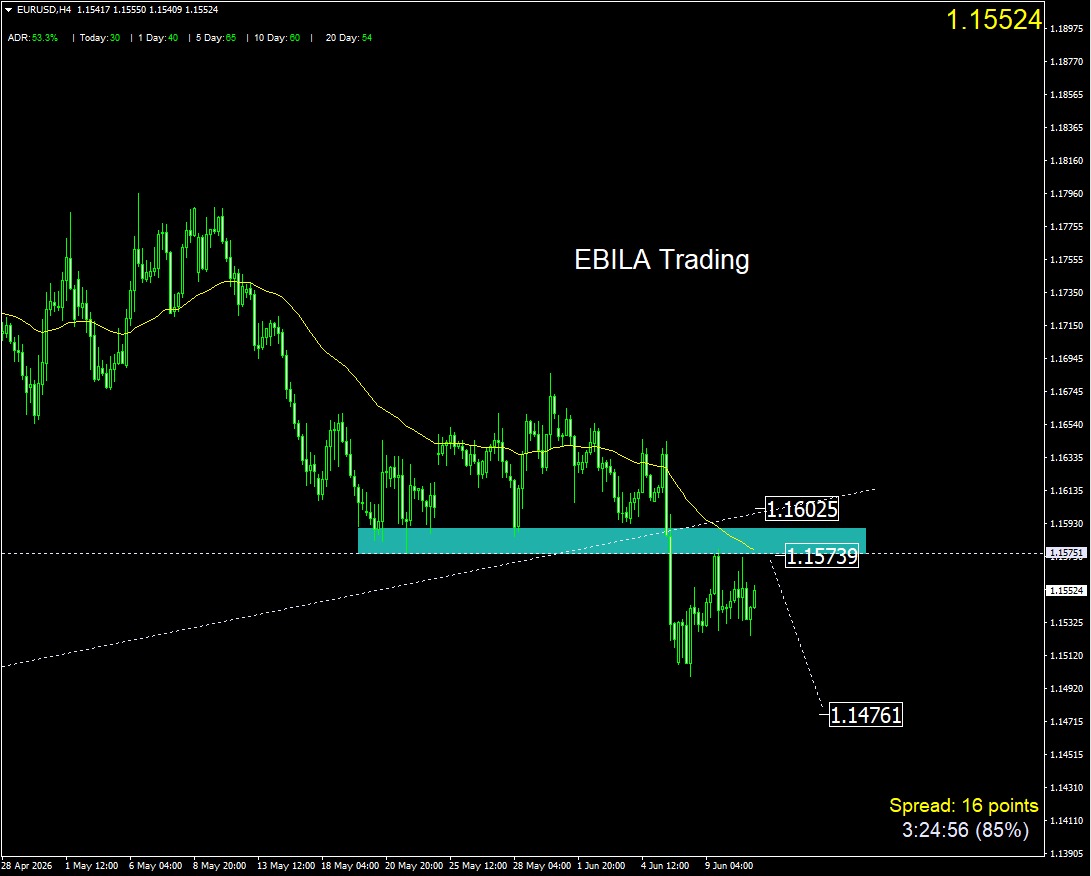
According to some market analysts, the euro’s recent weakness reflects investors adjusting their expectations for the Fed’s interest rate outlook. Meanwhile, expectations of an ECB rate hike have already been largely priced into the market.
The key focus of the ECB meeting is not only the rate decision itself, but also the central bank’s policy guidance going forward. If the ECB does not provide a clear signal about the possibility of further monetary tightening, the euro could face additional short-term pressure.
Among other major currencies, the British pound and the Japanese yen also strengthened slightly against the U.S. dollar, although overall movements remained limited. The pound traded around USD 1.3381, while the yen stood near 160.5 per dollar, a level that keeps markets alert to the possibility of intervention from Japan.
Beyond monetary policy, tensions in the Gulf remain a key risk factor. Recent developments between the United States and Iran have made investors more cautious, especially as the conflict could affect energy prices and global inflation expectations.
U.S. inflation data also continues to influence market expectations. The Consumer Price Index rose 4.2% in the 12 months through May, showing that price pressures remain present. However, core CPI increased at a slower pace compared with the previous month, giving markets some hope that inflationary pressure may be contained.
Still, investors remain inclined to believe that the Fed will maintain a cautious stance and could even tighten policy further if inflation does not cool as expected. This has helped the U.S. dollar maintain relative strength against other major currencies.
Overall, the currency market remains cautious amid several key factors: the ECB’s policy decision, the Fed’s interest rate outlook, developments in the Japanese yen, and geopolitical risks in the Gulf region. In the short term, the euro may continue to trade within a narrow range if the ECB does not provide a strong enough signal on its future policy path.
This content is for market information purposes only and does not constitute trading advice.
Source: Reuters