 15
15Investor
January 21, 2026
Emotions in investing: a hard-to-quantify variable that drives most outcomes
.png&w=3840&q=75)
In investing, most people focus on three things: news, analysis, and entry points. But in practice, there’s one variable that rarely appears in any “spreadsheet” yet has the strongest influence on long-term performance: emotion.
Emotions don’t just distort a few small decisions. They can bend the entire system from discipline and risk management to the ability to follow a plan during high volatility.
If we view markets as a probability game, then emotion is the factor that causes investors to destroy their own expected value.
Why emotions reduce performance at a “system level”
Emotions make you change the rules mid-trade
A profitable trading system doesn’t need to be “right every time.” It needs to be right on average across many cycles.
However, when emotions arise (fear, greed, regret, anger), investors typically:
enter earlier than the calculated entry
stop out early because they can’t tolerate noise
move the stop-loss out of hope
take profits too soon for fear of giving back gains
increase position size after a winning streak due to overconfidence
These behaviors are not a lack of knowledge. They are failures in “system execution” caused by psychology.

Emotions distort capital allocation and break risk management
Risk management is the backbone of performance. Emotion is what regularly breaks that backbone:
In favorable markets → overtrading, taking risks beyond the plan
In adverse markets → holding losers, revenge trading, deeper drawdowns
After a major loss → becoming overly defensive and missing high-quality setups
Result: investors don’t lose because markets are “too hard.” They lose because emotional volatility amplifies account volatility often by multiples.
Emotions turn you into a candle-by-candle reactor instead of a scenario trader
Markets constantly generate “noise signals” that test discipline.
Without a clear scenario framework, you end up trading feelings:
price surges → you buy out of fear of missing out
sharp drops → you sell out of fear of loss
sideways action → you get bored and take random trades
This loop pushes many investors into: small repeated losses – occasional large losses – psychological exhaustion.
The real issue is not “eliminating emotions”
No serious investor has zero emotion. Skilled investors have a decision structure strong enough that emotions can’t hijack the process.
In real trading, you only need to consistently answer three system questions:
Where is the entry, and what data supports it?
If wrong, where is the invalidation, and what is the maximum acceptable risk?
If right, where is the target, and under which scenario?
Most investors fail because they can’t maintain these three questions consistently when volatility increases.
Ebila AI: a “discipline layer” that shifts decisions from emotion to data
Ebila AI is designed to solve one core problem:
reducing behavioral bias through data-driven analysis and a clear decision-making process.
Instead of letting emotions lead, Ebila AI supports investors by providing:
Big Data–based analysis (less subjective decision-making, more probability thinking)
Real-time signal updates (less lag, fewer rumor-driven actions)
Clear trade scenario interpretation (entry – risk control – objectives)
Process reinforcement when the market produces noise
Put simply: Ebila AI doesn’t “trade for you.”
Ebila AI helps you make decisions like a system, not like a reflex.
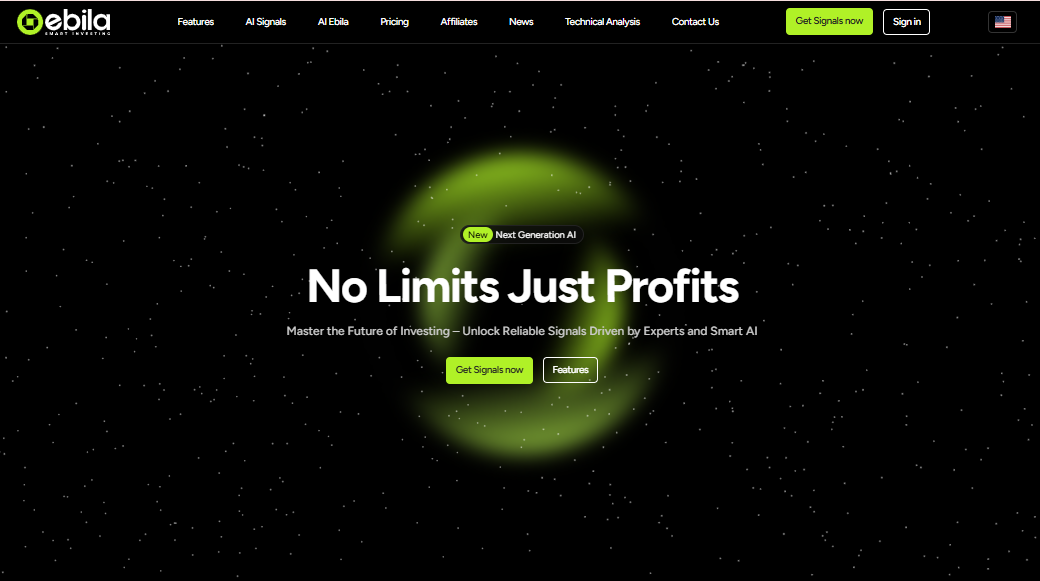
Where Ebila AI delivers the most value: the three moments discipline breaks
✅ When you’re about to enter
Ebila AI provides signals and clarity so you don’t “buy on impulse” or “sell in panic.”
✅ When volatility rises and you start doubting your plan
Ebila AI helps you stay anchored to data and scenarios, instead of letting one candle rewrite your entire strategy.
✅ When you feel the urge to recover after a loss
This is where accounts are most often damaged. Ebila AI helps you see risk and scenarios clearly, reducing revenge trading behavior.
Sustainable investing is behavior management, not just price prediction
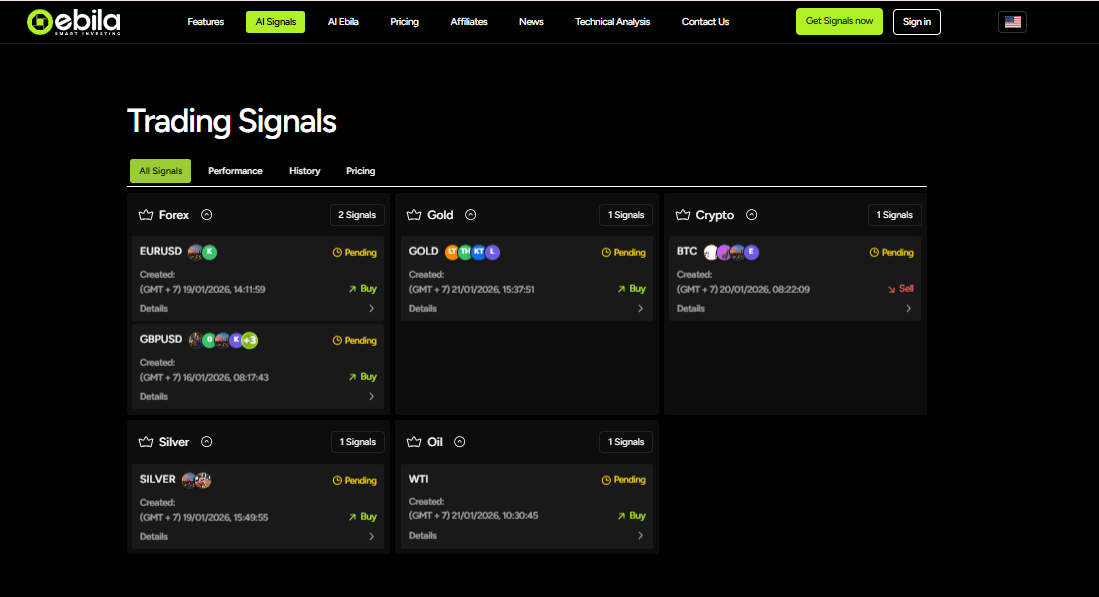
If you look back at the path of most investors, you’ll see this:
the biggest mistakes rarely come from “not knowing how to analyze.”
They usually come from not being able to stay disciplined when emotions rise.
The real edge isn’t “predicting the market.” It’s:
making probability-based decisions
keeping risk within limits
optimizing process execution
preventing behavioral bias from hijacking key decisions
Ebila AI was built to support exactly that:
turning investing from emotion into a system.